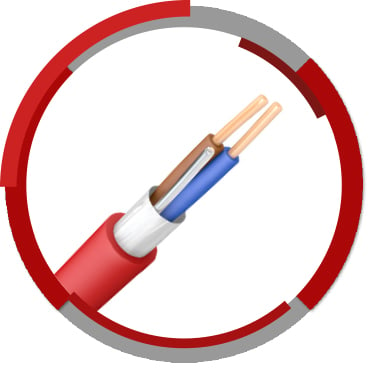
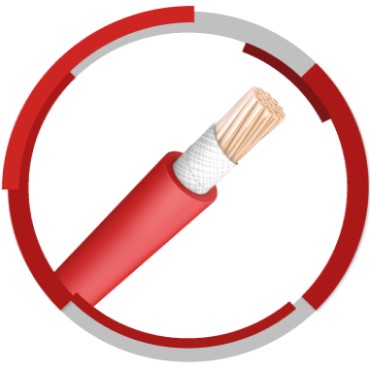
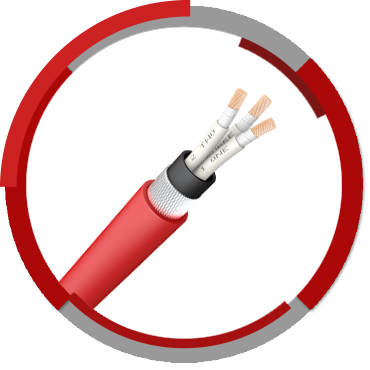
a) FP200® uses Insudite – it’s a tough composite insulation, resistant to impact, nicking and abrasion; all things that normally result in failure of silicone cables.
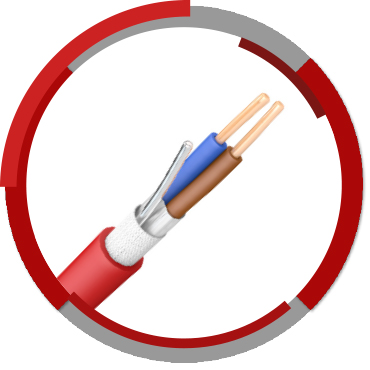
b) FP200 Gold® is a dressable cable - it retains the shape you give it during installation and stays where it’s put for first fix. This eliminates the festooning you get with some pliable cables too.
c) FP200® cables strip easily - there are no fiddly tapes to remove separately, metallic or fibreglass tapes which makes termination cleaner and quicker.
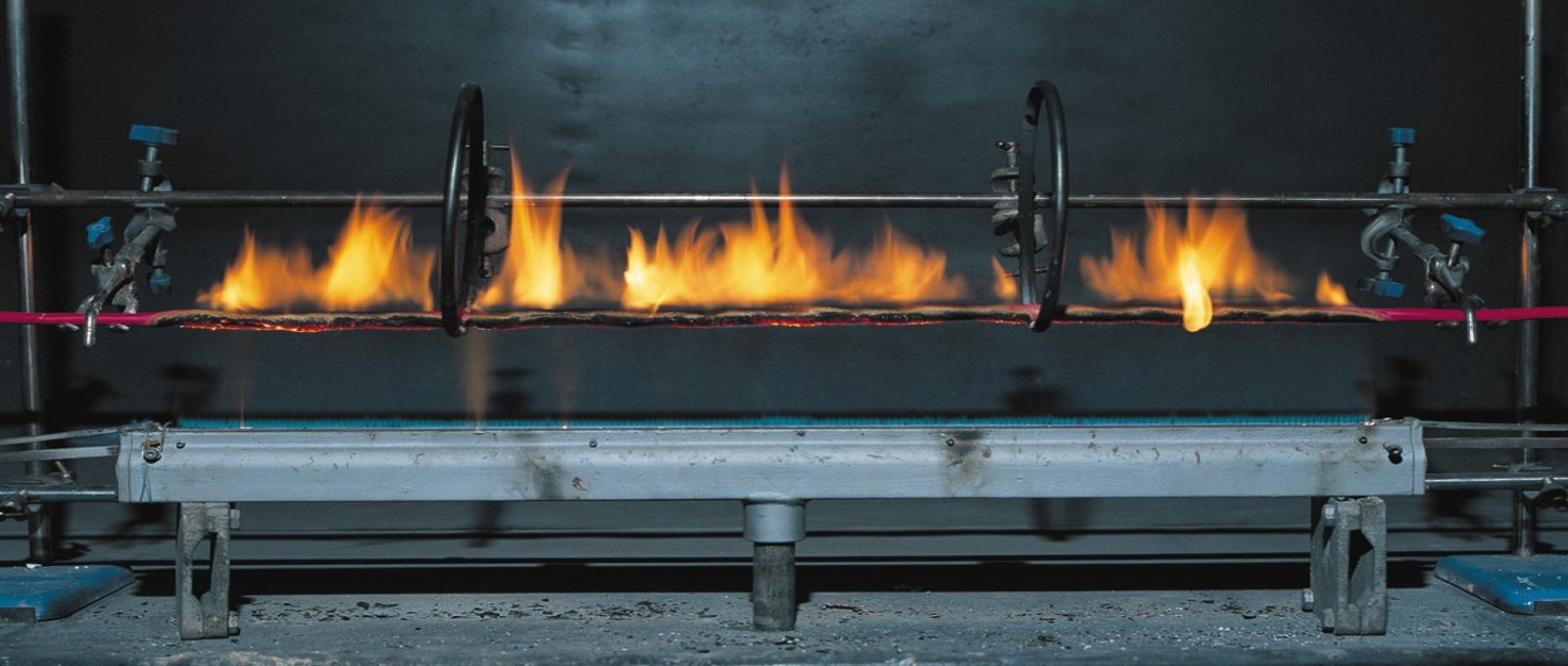
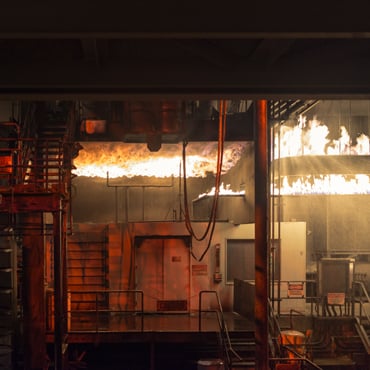
a) Yes – The fire alarm code of practice, BS 5839-1:2002 requires standard fire resistant cable to pass EN 50200 Annex E. That’s fire,impact and water spray for 30 minutes at 850C on the same sample ie an integrated test.
BS6387:1994 contains a set of separate fire, water and shock tests and the highest grade is CWZ. In order to meet CWZ and comply with the standard cable must pass the following three separate tests:
C – Resistance to fire at 950ºC for 3 hours
W - Resistance to fire and water at 650ºC for 30 minutes and
Z - Resistance to fire and mechanical shock at 950°C for 15 minutes
i)Yes – nail penetration test etc
Good practice expects fire resistant cables to be run without joints - they should be installed in a single continuous length. If jointing is unavoidable then a fire resistant box containing ceramic connectors should be used.
The FP FIREFIX fixing system is the fastest way to install FP 200GOLG® ccables - using Spit Pulsa® gas nailing technology. The clips is made from non rusting stainless steel with a LSOH power coating.
FP FIREFIX kit includes all parts necessary to install 500 clips with the Spit Pulsa® Fixing tool available seperately. The tool uses gas nailing technology to fix the clip securely into a wide range of materials including concrete, steel, composite steel decking, masonary and block work.
Copper "P" clips or steel ties can also be used to install FP200® but plastic or aluminium clips should not be used as sole support. Aluminium and plastic melt or burn during a fire and the cable may colapse. Reference numbers are shown in our brochure.
Nylon glands are ecommended for general use, refer to brochure for details. Brass or steel glands may be used as alternatives.
There is no obvious advantage offering a fire alarm cable that claims to be rated above 70°C:
a) Temperature limitation of connectors and accessories is usually 70ºC or 90ºC.
See BS7671: 1992 /IEE Wiring Regulations 16th Edition clause 512 - 02 - 1.
b) Effect of cable temperature on adjacent components since the surface temperature of the cable is only likely to be 10ºC less than the conductor. If laid next to a PVC cable then the surface temperature of the cable must not exceed 80 ºC. [Ref: BS7671: 1992 /IEE Wiring Regulations 16th Edition section 422 "Protection Against Fire And Harmful Effects".]
c) Touch temperature should be less than 90ºC. [ Ref BS7671: 1992 /IEE Wiring Regulations 16th Edition section 423 "Protection Against Burns".]
d) Fire alarm cables are normally sized on volt drop considerations rather than current ratings.
Standard lengths are always in stock for 50, 100 & 500m in the common sizes. Other lengths are non standard and can be made to special order. Lead times and MMQ apply.
Standard colours are Red and White. Most other colours are available, including colour matches, to special order. Lead-times and MMQ apply.
Yes, with care, but we recommend FP200Flex® as it’s designed for the purpose.
Extruded insulation is generally used for 300/500V rated cables and small conductors , Mica tape is generally used for 600/1000V rated cables and larger conductors. This gives the best balance of cost and performance.
No – Rodent damage can only be prevented by using mechanically robust protection, such as steel conduit or truncking. Armouring or Nylon jacketing could reduce the effect of rodent attack but cannot safeguard against attack over time. No standards currently exist that cable or systems could meet that eliminate rodent attack. We do not promote any of our cable products as being totally rodent proof however, FP200Gold® is a tough cable and experience has shown that it is resistant to rodent attack. We have received no reports of damage to cables in service, even when installed in areas where other cables have been attacked.
FP200 Gold® may generally be installed alongside other cables because it has a 360º aluminium foil screen. However BS5839-1:2002 does not allow any fire alarm cable to be installed in the same conduit or common trunking (unless in its own compartment) as any other cables. The fire alarm equipment manufacturer may also recommend separation of cables to minimise electromagnetic interference.
Recommended clip spacings are given in our brochure and are generally 300mm horizontal and 400mm vertical installation.
All fixed wiring cables including FP have a minimum design life in excess of 20 years and we expect them to last well in excess of that under normal operating conditions. Cables are subject to the standard guarantee as given in the Prysmian Terms and Conditions of sale.
A high chlorine environment for example a swimming pool over a period of time, can cause corrosion of the aluminium tape screen. This occurs at the termination and can take over 5 years before noticeable corrosion becomes apparent. This is considered no problem and does not affect the cable's performance in a fire.
No – Prysmian replaced silicone rubber with Insudite in 1995 and Insudite is tough and resilient. Ferrules they are no longer required because of the change to damage resistant Insudite insulation.
This is possible provided that the catenary wire and clips are fire resistant e.g. steel. Spacing should be as for P clips but, other methods of installation would be preferable
For external exposure to UV we recommend white or black sheathed FP. Do not use red sheathed FP outside without additional protection.
Disclaimer: The information given in this document is believed to be correct at the time of loading but may be subject to change.
Document last Revised July 2010